
Surgical & Specialty
Bone Grafts in Sycamore, IL
Rebuild the foundation for lasting dental restorations at Sycamore Dentistree.
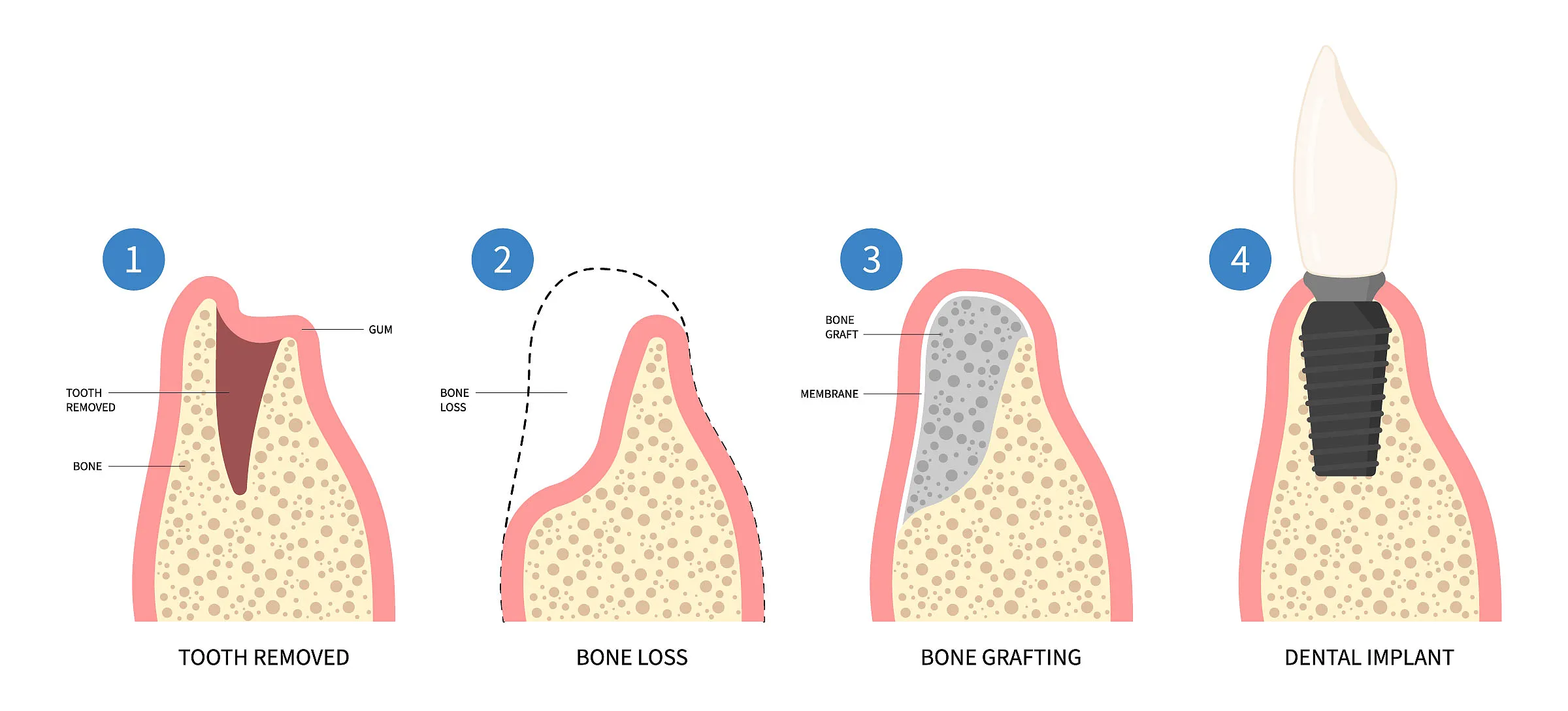
When tooth loss occurs, the jawbone beneath it begins to shrink. Bone grafting rebuilds that lost structure, restoring the foundation needed for dental implants and preventing the facial changes that follow unchecked bone loss. At Sycamore Dentistree in Sycamore, IL, bone grafting is performed with precision and care as part of a comprehensive implant or restorative plan.

Comprehensive and Gentle Dentistry Under One Roof
Bone Grafting at Sycamore Dentistree
The jawbone requires stimulation from tooth roots to maintain its density. When a tooth is lost — whether to decay, gum disease, or trauma — that stimulation stops and the bone begins to resorb. Over time, this causes visible changes to the face and jaw and can make implant placement impossible without intervention. A bone graft restores the volume and density needed to support implants and preserve facial structure.
When Bone Grafting Is Needed
Not every patient who wants implants needs a bone graft, but it is common enough that we evaluate bone volume as part of every implant consultation.
- After Tooth Extraction A socket preservation graft placed at the time of extraction prevents the bone loss that typically follows.
- Before Implant Placement When bone loss has already occurred, a graft rebuilds the site to the dimensions required for safe, stable implant placement.
- After Gum Disease Periodontal disease destroys bone around the roots of teeth. Grafting can help restore lost bone and support remaining teeth or implants.
Types of Bone Graft Material
Bone graft material can come from your own body, a donor, a bovine source, or synthetic materials. Each has clinical advantages depending on the situation. We discuss the best option for your specific case during your consultation.
What to Expect During Recovery
Bone grafts require a healing period before implants can be placed — typically 3 to 6 months depending on the size of the graft. During this time, the graft material integrates with your natural bone. We monitor healing closely and confirm readiness before moving forward with implant placement.
Bone Grafts FAQ
- Is a bone graft painful?
- The procedure is performed under local anesthetic, so you will not feel pain during. Afterward, soreness and mild swelling for several days is normal. Most patients manage discomfort well with over-the-counter medication.
- How long does a bone graft take to heal?
- Most bone grafts require 3 to 6 months to fully integrate before an implant can be placed. Smaller grafts at extraction sites may be ready sooner. We confirm readiness with imaging before proceeding.
- Will I need a bone graft before my implant?
- Not always. We evaluate bone volume with 3D cone beam imaging at your implant consultation. Many patients have sufficient bone; others need a graft first. We give you an honest assessment before any decisions are made.
- Where does the graft material come from?
- Graft material can be taken from your own body, a processed donor source, bovine-derived material, or fully synthetic. Each has clinical advantages. We discuss the best option for your case.
- Can I get a bone graft and implant at the same time?
- In some cases, yes — particularly with socket preservation grafts at extraction. Whether simultaneous placement is appropriate depends on the amount of bone present and the stability achievable during surgery.
- What happens if I do not get a bone graft after a tooth extraction?
- Bone resorption begins almost immediately after a tooth is lost. Over months and years, the ridge shrinks, making implant placement more difficult or impossible without a larger graft later. Preservation at extraction is almost always the simpler and less expensive path.
- How long does the bone graft procedure take?
- Most bone grafting procedures take 30 to 90 minutes depending on the scope. Socket preservation is typically quick; larger ridge augmentation procedures take longer.
- Is a bone graft safe?
- Yes. Bone grafting is a well-established procedure with a strong safety and success record. All donor-sourced materials used in dentistry are processed to the highest standards.
- What can I eat after a bone graft?
- Soft foods for the first several days — soup, yogurt, mashed foods. Avoid hard, crunchy, or chewy foods near the graft site. We give you specific dietary instructions at your appointment.
- Does insurance cover bone grafting?
- Coverage varies. Some plans cover a portion of bone grafting when performed in conjunction with tooth extraction or as part of a medically necessary restorative plan. We help you verify your benefits in advance.