
Restorative & Orthodontics
Dental Implants in Sycamore, IL
The permanent solution for missing teeth — strong, natural-looking, and built to last a lifetime at Sycamore Dentistree.
Dental implants are the closest thing modern dentistry has to a natural tooth. At Sycamore Dentistree in Sycamore, IL, Dr. Neglia has extensive experience with implant dentistry — offering patients a permanent, confident solution to tooth loss that looks and feels completely natural.
Comprehensive and Gentle Dentistry Under One Roof
Dental Implants at Sycamore Dentistree
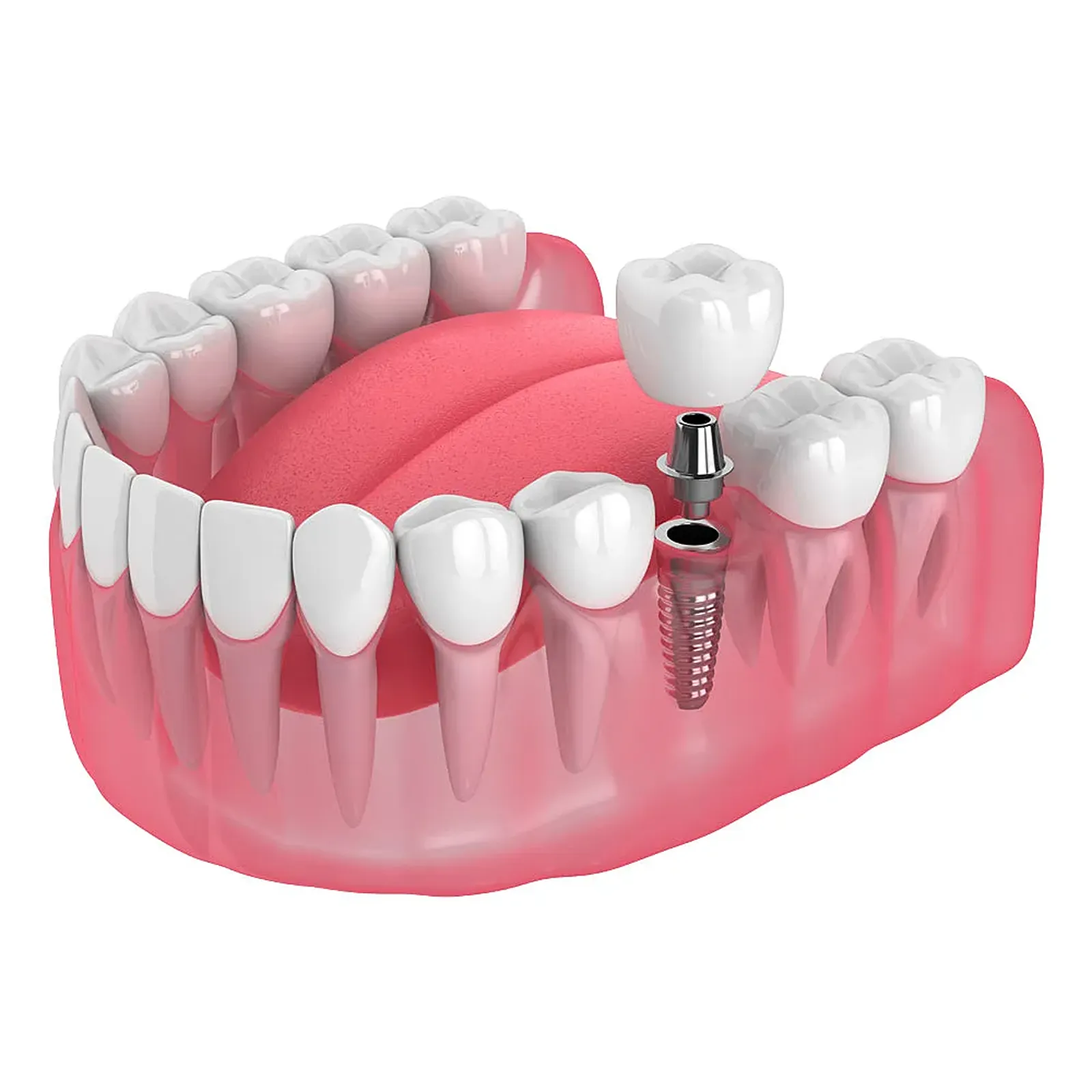
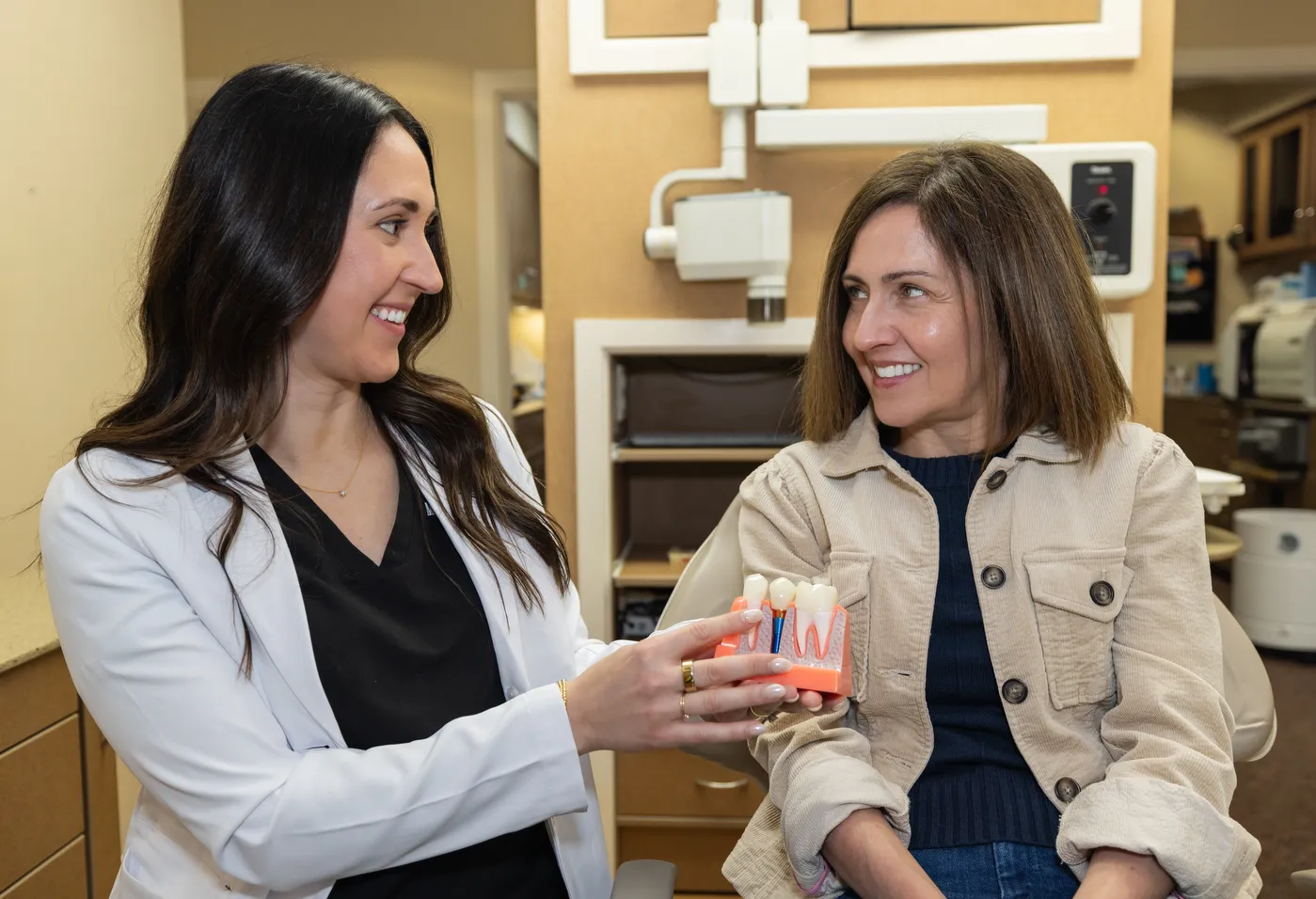
Unlike dentures or bridges, implants replace the root of the tooth — not just the crown. A titanium post is placed directly in the jawbone, where it integrates with the bone over time through a process called osseointegration. This creates a stable, permanent foundation for a crown, bridge, or denture that functions just like a natural tooth — no slipping, no diet restrictions, no daily removal.
What the Implant Process Involves
Implant treatment takes place over several months to allow for proper healing, but the final result is a tooth that can last a lifetime with proper care.
- Consultation and Planning We use 3D cone beam imaging to evaluate your bone volume and plan the precise placement of your implant.
- Implant Placement The titanium post is surgically placed in the jawbone under local anesthetic. A healing period follows while the implant integrates.
- Abutment and Crown Once healed, an abutment is attached to the implant and a custom crown is placed — completing your new tooth.
Implant Solutions for Multiple Missing Teeth
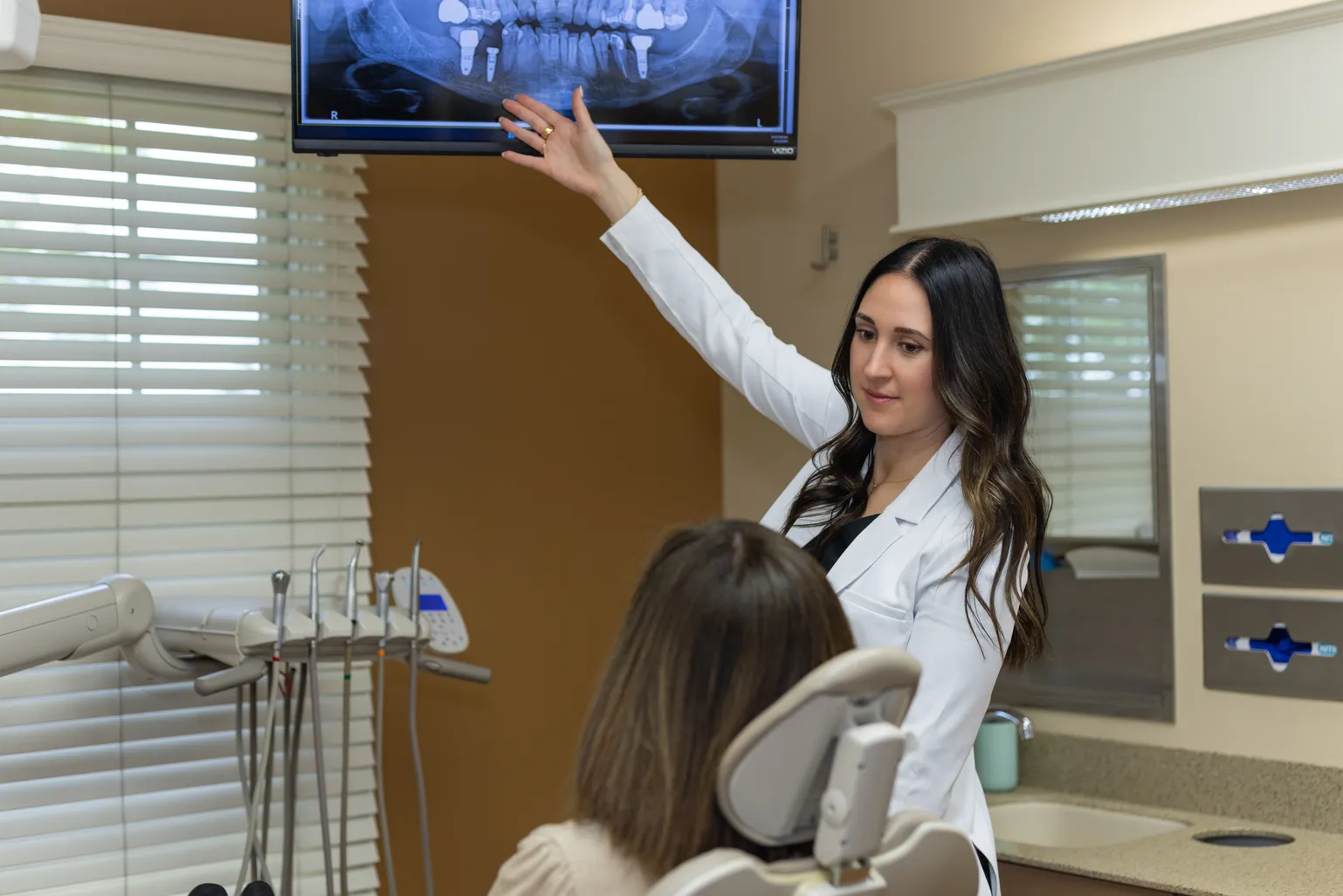
Implants are not just for single tooth replacement. We offer implant-supported bridges for multiple adjacent missing teeth and implant-supported dentures for patients who have lost most or all of their teeth. These solutions offer superior stability compared to traditional dentures and preserve the jawbone that is lost with other options.
Are You a Candidate for Dental Implants?
Most healthy adults with adequate jawbone volume are candidates for implants. Bone grafting can often create a suitable foundation for patients who have experienced bone loss. The best way to find out if implants are right for you is to schedule a consultation — we will evaluate your bone, health history, and goals and give you an honest assessment.
Implant Retained Crowns
An implant retained crown replaces a single missing tooth with a titanium implant post topped by a custom-made porcelain crown. It stands completely independently without affecting neighboring teeth, looks and feels like a natural tooth, and with proper care can last a lifetime. This is the most natural and conservative option for a single missing tooth.
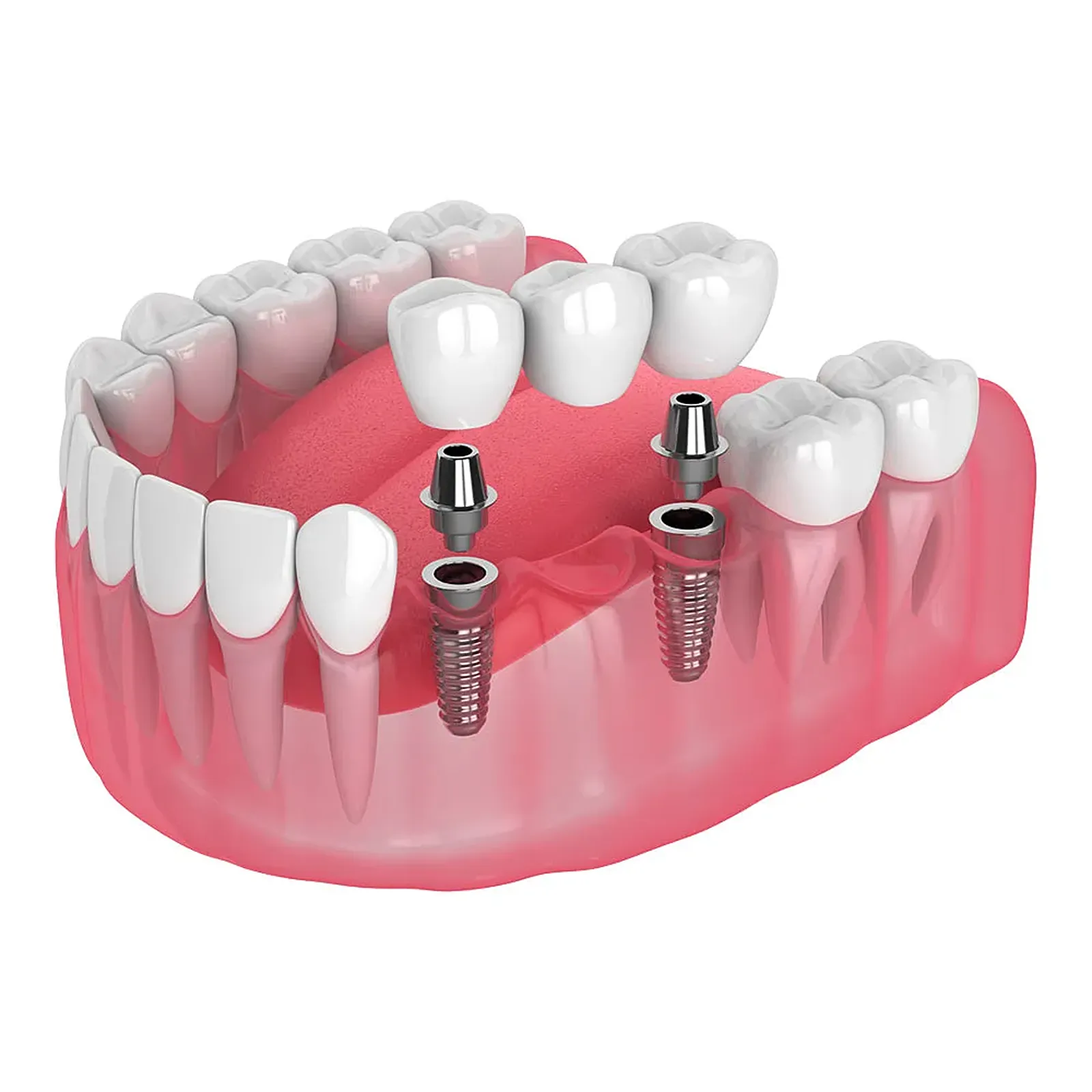
Implant Supported Bridge
An implant supported bridge replaces multiple consecutive missing teeth by anchoring a bridge to two implant posts — rather than crowning healthy adjacent teeth as a traditional bridge requires. No natural tooth structure needs to be reduced, and the result is a stable, permanent restoration that preserves surrounding teeth and maintains jawbone health beneath the replacement.
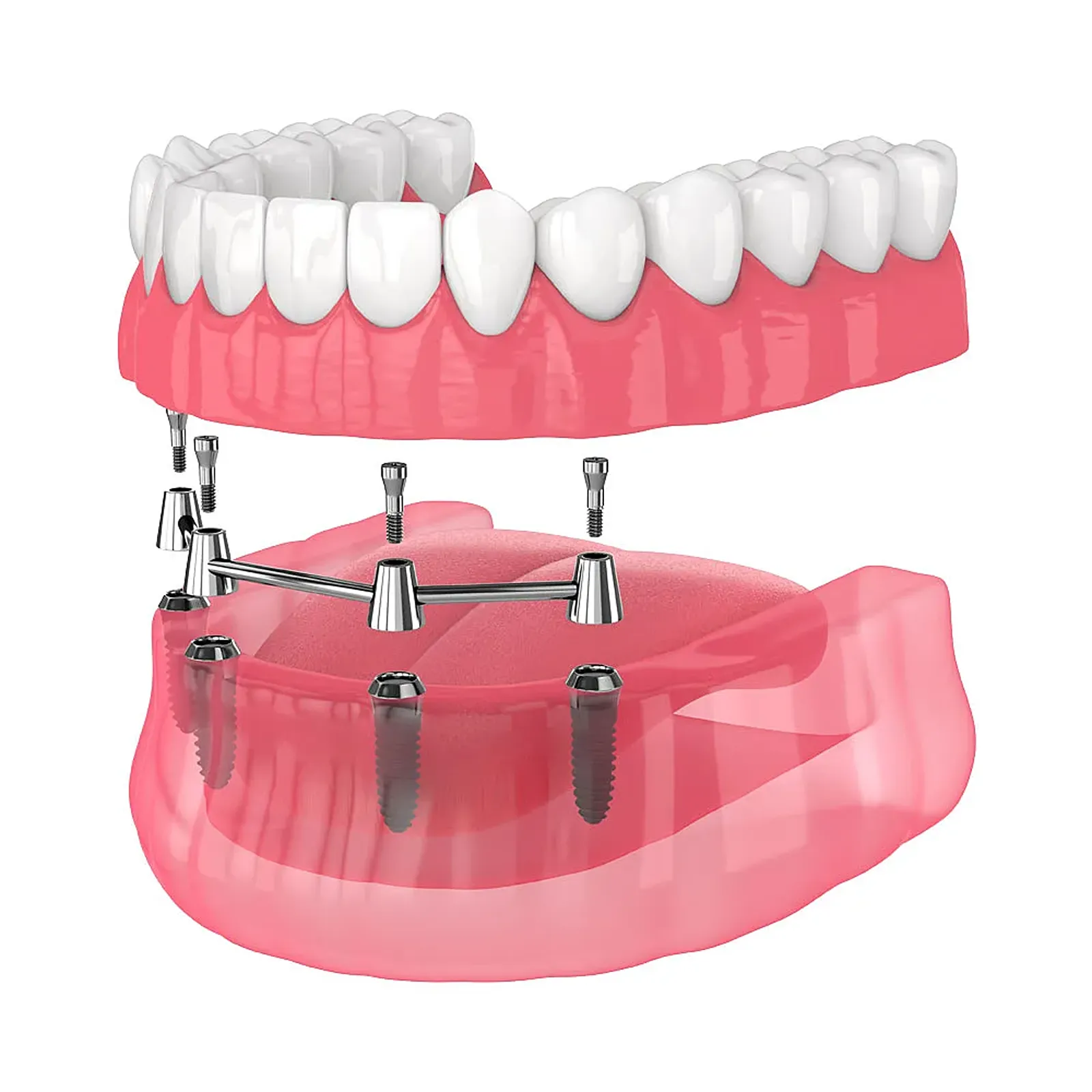
Implant Supported Dentures
Implant supported dentures snap securely onto a series of implant posts, giving you the stability and confidence that traditional removable dentures simply cannot provide. They eliminate slipping when you eat or speak, significantly improve chewing function, and help preserve the jawbone over time. They can be removed for cleaning but stay firmly in place throughout the day — a genuinely life-changing upgrade for many denture wearers.
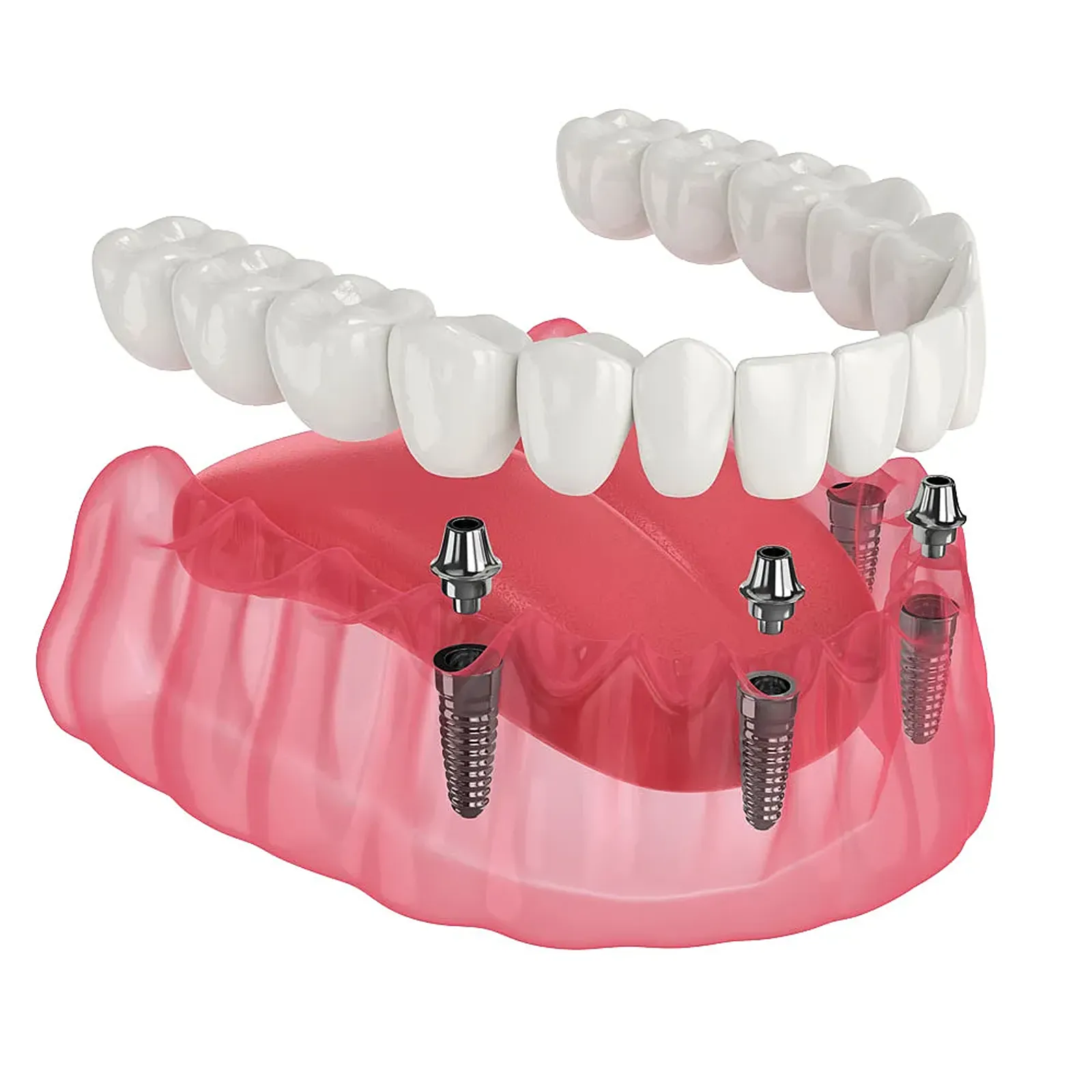
All-on-4 Implants
All-on-4 is a full-arch restoration that replaces an entire row of upper or lower teeth using just four strategically placed implants. Two implants are placed vertically at the front of the jaw and two are angled at the back to maximize contact with available bone — making it possible for many patients to avoid bone grafting entirely. The result is a fixed, non-removable arch of teeth that looks and functions like natural teeth.
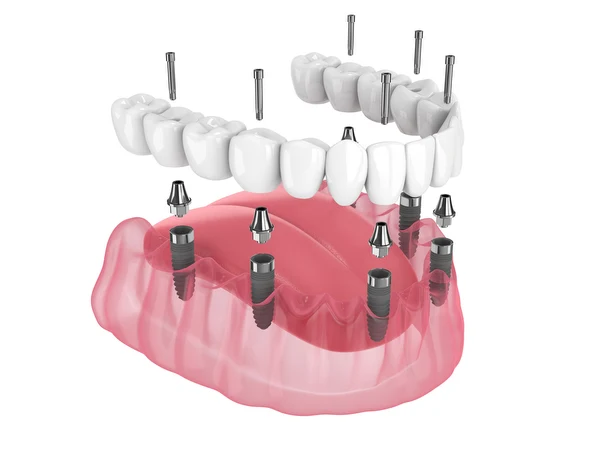
All-on-6 Implants
All-on-6 uses six implants instead of four to support a complete arch of replacement teeth, providing additional stability and load distribution across a wider area. This is often the preferred option for the upper jaw where bone density can be lower, or for patients who want maximum long-term strength. The extra implants give the prosthesis added security and can extend the overall lifespan of the restoration.
Mini Dental Implants
Mini dental implants are narrower-diameter posts designed for situations where bone volume is limited or a less invasive procedure is preferred. They can often be placed in a single appointment and are commonly used to stabilize lower dentures in patients who are not candidates for standard implants. Mini implants are a practical, cost-effective alternative that can significantly improve quality of life for the right patient.
Dental Implants FAQ
- How long do dental implants last?
- With proper care, dental implants can last a lifetime. The implant itself integrates permanently with the bone; the crown on top typically lasts 10 to 20 years before it may need replacement due to normal wear.
- Is implant surgery painful?
- Most patients report that the procedure is more comfortable than they expected. We use local anesthetic throughout, and many patients compare the discomfort afterward to having a tooth extracted. We provide guidance on managing any post-procedure soreness.
- How long does the entire implant process take?
- From placement to final crown, the process typically takes 3 to 6 months. The longest phase is the healing period after implant placement, during which the titanium integrates with your bone.
- Who is a good candidate for dental implants?
- Most healthy adults with sufficient jawbone density are good candidates. Conditions like uncontrolled diabetes or active gum disease must be addressed first. We evaluate each patient individually to determine candidacy.
- What happens if I do not have enough bone for an implant?
- Bone grafting can often build up the area and create a solid foundation for implant placement. We evaluate bone volume with 3D imaging and discuss whether grafting is needed before proceeding.
- Are dental implants better than dentures?
- For most patients, yes. Implants function like natural teeth, preserve the jawbone, require no adhesives, and have no dietary restrictions. They also tend to be more comfortable and confidence-inspiring long-term. However, they require surgery and a longer treatment timeline.
- Can I get an implant right after a tooth extraction?
- In some cases, yes — this is called immediate implant placement. Whether it is appropriate depends on the condition of the bone and socket after extraction. We assess this on a case-by-case basis.
- Do implants look and feel natural?
- Yes. The crown is custom-made to match your surrounding teeth in shade, shape, and size. Most patients say they forget the implant is not their real tooth.
- How do I care for a dental implant?
- Care for an implant just like a natural tooth — brush, floss, and attend regular cleanings. Implants cannot get cavities, but the surrounding gum and bone still need to be kept healthy.
- Does insurance cover dental implants?
- Coverage varies widely. Some plans cover a portion of the cost; others do not. We help you understand your benefits and discuss financing options to make treatment accessible.