

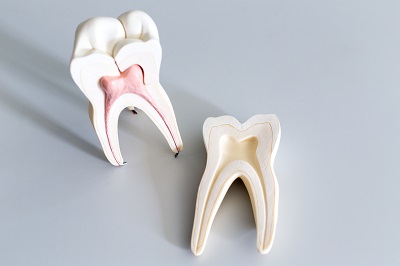
Reasons for Root Canal Therapy
July 14, 2021
To Remove Infection
When your tooth’s pulp or nerve tissue is damaged, it breaks down and allows bacteria to multiply within the pulp chamber. Typically, bacteria and other decayed debris can trigger an infection or abscessed tooth. Often associated with pulsating pain, an abscess is a pocket that forms around the roots of the affected tooth. This can happen when the infection is allowed to spread beyond the ends of the tooth’s roots.
An infection in the root canal can also cause:
- Swelling that extends to other areas of the face, head, or neck
- Bone loss around the root’s tips
- Drainage issues extending outward from the root
Pulp infection is a sign that the tooth is dying, and it’s not going to go away on its own. When left untreated, the pain can worsen, and the infection can spread to other parts of the body. A root canal is an effective way to address nerve tissue infections and save your natural tooth.
To Keep Your Natural Tooth Root
Losing a permanent tooth is a significant dental problem. It affects more than just your smile. Losing even a single tooth can have far-reaching effects, such as:
- Diminishing Oral Function: Depending on how many teeth you’ve lost and their location, you may find it difficult to bite or chew crunchy food.
- Bone Loss: Your teeth are lodged in the jawbone and help to stimulate bone and keep it dense through regular chewing. When teeth have been missing for extended periods, your jawbone can begin to shrink, causing premature aging or a sunken appearance.
- Further Tooth Loss and Alignment Issues: Bone density loss can cause other teeth to loosen in the long run. Significant gaps in your smile can also cause surrounding teeth to begin shifting towards the open spaces.
Other Endodontic Treatments
In some cases, root canal therapy is not a cut-and-dry procedure. For example, retreatment deals with the entire length of the root canal, while apicoectomy treats only the area around the final 6mm of the canal. In addition, endodontic surgery can find hidden canals, remove calcium deposits, repair root surfaces and the surrounding bone.
Root Canal Myths
Many people seem to cringe whenever they hear the terms root canal therapy. Here are some common myths about root canal treatment to give you a better sense of what it is and what isn’t true.
- Root Canals Hurt: With modern technology and efficient anesthetics, root canal therapy is no more painful than a regular filling.
- Root Canals Takes Several Visits to the Dentist: Today’s cutting-edge technology enables dentists to perform most root canals in one or two office visits.
- Crowns Cause Teeth to Require Root Canals: Crowns don’t trigger the need for root canal therapy. If a tooth with a dental crown requires a root canal, then that tooth may have abscessed, or the decay has extended underneath the crown, all the way to the pulp of the tooth.
- Root Canals Cause Illness: Currently, there is no evidence to suggest that root canals cause illness.
- Root Canals Involve Extracting the Roots of the Tooth: During a root canal, your dentist only removes the pulp or nerve tissue from the inside of the affected tooth, leaving the roots intact.
Do You Need Root Canal Treatment?
You can benefit from root canal therapy if your tooth becomes inflamed and damaged. When your tooth’s dental pulp becomes exposed to bacteria, it needs to be removed to stop further pain and infection.
Common signs that you need root canal treatment include pain and sensitivity to hot or cold foods that linger after the stimuli have been removed. You may also notice a tiny, pimple-like bump on your gums near the point of pain. However, the only sure way to know if you need a root canal is to see your dentist for a professional consultation and a complete exam.