

What to Expect With Dental Implants
August 18, 2021
Requirements for Getting a Dental Implant
You must have healthy gums, as well as sufficient jawbone density, to be eligible for dental implants. If your jawbone is too thin or weak, it will not provide adequate support for your implant posts. To ensure the proper placement and lasting durability of your implants, your dentist may recommend a bone graft or a sinus lift to reinforce the jawbone structure.
Dental Implant Procedure
A dental implant procedure takes place over multiple appointments and may take three to nine months from start to finish. Here are the steps you can expect to go through when getting dental implants.
- Initial Evaluation: During your first visit, your dentist will thoroughly assess your oral health to establish your suitability for the implants and plan your treatment. The evaluation may include taking x-rays and 3D images to catch any issues invisible to the naked eye.
- Implant Placement: After carefully evaluating your dental health, your dentist will determine the ideal placement of your implant posts. Your dental care team will surgically place your implant posts in your jaw with care and precision.
- Recovery: After your implant posts are in place, you will need time for your jaw to heal. The resting period is crucial to allow the implants to fuse with the jawbone to create a stable foundation for your dental restoration. Recovery may take a few months.
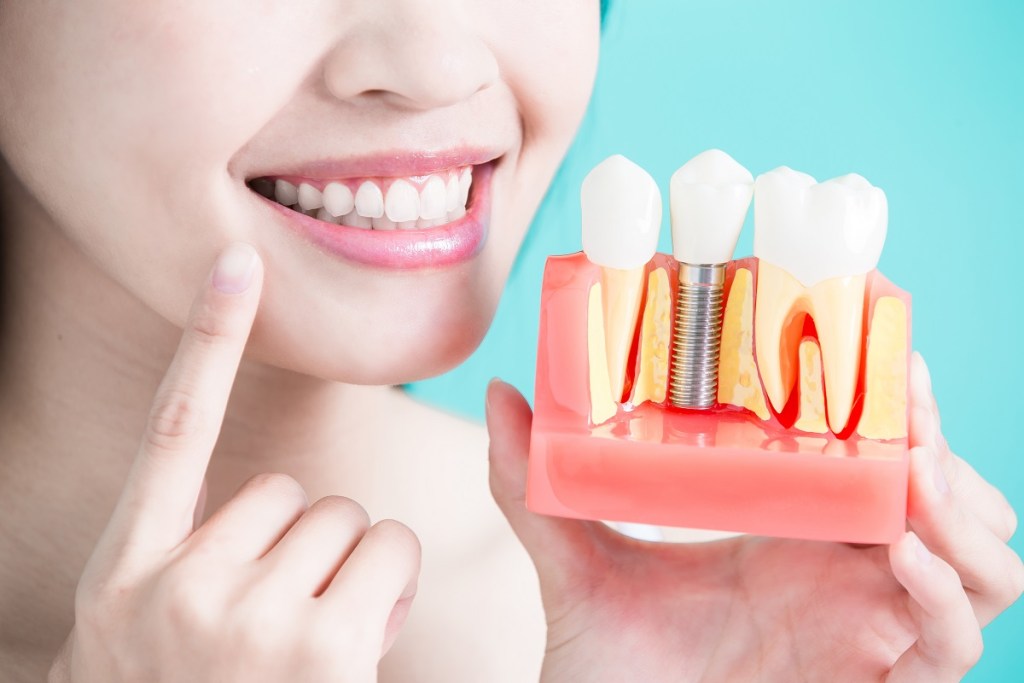
- Abutment Placement: An abutment is a connecter that forms the base for your prosthetic teeth to attach to the implant posts. After the dentist places your abutment, you will need at least two weeks for the surrounding gum tissue to heal.
- Restoration Attachment: Once your jaw heals, your dentist will place the final restoration on the abutment to complete the process. Depending on your needs, you may receive a crown, bridge, or implant-supported dentures to replace your missing tooth or teeth.
After the Surgery
Like any other surgery, you can expect side effects after your dental implant placement. These can include slight swelling around your gums and face, bruising, and some pain and discomfort at the implant placement site. Your dentist will advise on medications to help you manage any post-surgery discomfort. Also, sticking to soft foods during healing can help you avoid aggravating your jaw and gums. If you experience severe side effects, don’t hesitate to inform your surgeon.
Proper oral hygiene is necessary to protect your oral health and ensure the longevity of your implants. You can floss and brush your implant-supported restorations just as you would your natural teeth, and you should schedule regular dental checkups to maintain your oral health.
Every patient’s experience with dental implants may differ depending on their oral health, jawbone density, and the number of implants required. Your surgeon will walk you through your available options and provide personalized advice tailored to your unique situation. By following your dentist’s instructions on caring for your implants, you’ll help ensure they serve you for years to come.